
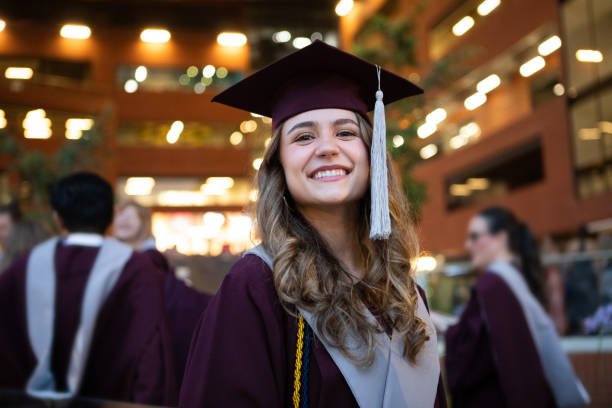
The pursuit of quality education in the United States has continued to attract thousands of international students every year. Private high schools in the U.S. have been widely recognized for their exceptional learning environments, personalized teaching standards, structured extracurricular activities, and well-established pathways toward top global universities. As education becomes increasingly globalized, more families around the world have begun to consider sending their children to American private schools to gain an advantage academically, socially, and professionally.
However, the high cost of attending private high schools in the United States has made the process challenging for many international families. Tuition fees at top boarding or day schools have often ranged between $40,000 and $75,000 per year, depending on whether students board on-campus or live with a host family. These costs have been significantly higher than costs in most countries, which has made scholarships and financial-aid programs extremely important for international applicants.
For the 2026 academic cycle, several private schools, non-profit organizations, foundations, and exchange programs have continued to prepare attractive scholarship opportunities for international students who wish to study in the United States. These scholarships have been designed to support academically strong, talented, or financially disadvantaged students who can contribute to school communities while benefiting from world-class education. Some programs offer full scholarships; others offer partial funding, including tuition reductions, room and board, or support from host families.
In this article, a detailed breakdown of the top private school scholarships in the United States for international students in 2026 will be provided. Each scholarship type will be explained in-depth, eligibility requirements will be highlighted, application stages will be outlined, and important considerations for international families will be discussed. Furthermore, additional guidance for maximizing scholarship chances will be shared so that students can prepare early and apply confidently.
What “Private School Scholarships” Means in the U.S. Context
Difference Between Public and Private High Schools
A clear distinction between public and private schools in the U.S. must be understood before discussing scholarships. Public schools operate under local or state governments, and funding is obtained from taxes, which enables them to offer free tuition for residents. International students may still study in public schools but often only through short-term exchange programs or with restrictions placed on visa types.
Private high schools, on the other hand, operate independently of government funding. They rely heavily on tuition, donations, endowments, and fundraising activities. Because of this independence, private schools have greater flexibility in curriculum design, student selection, discipline policies, and extracurricular programming.
Private schools include:
- College-preparatory high schools
- Independent academic institutions
- Religious-affiliated schools
- Elite boarding schools
- STEM or arts-focused academies
Tuition in private schools has been significantly higher because costs are not subsidized by the government. Boarding schools charge even more because housing, meals, supervision, and facilities are all included.
Role of Scholarships in Private Schools
Scholarships in private high schools serve two core purposes:
- They open the opportunity for talented or motivated students who cannot afford full tuition.
- They help schools maintain diverse student populations, including international representation, which enriches cultural exchange and enhances global learning.
Scholarships may be:
- Merit-based – awarded according to academic excellence, talent, leadership, or unique abilities.
- Need-based – awarded due to financial challenges faced by the student’s family.
- Exchange scholarships – awarded for one-year study abroad programs through organizations like ASSIST.
- School-specific scholarships – offered directly by private schools from endowments or donor contributions.
A combination of these models is often used for international applicants.
Leading Scholarship and Exchange Programs for International Students
ASSIST Scholars Program
Overview of the Program
The ASSIST Scholars Program has been one of the most respected and long-standing international scholarship pathways for private high schools in the United States. The organization has been operating for decades with the goal of attracting outstanding students from around the world and placing them in top-tier American independent schools.
Through partnerships with recognized private boarding and day schools, ASSIST has helped hundreds of students gain access to high-quality American education with significant financial support. The program has been widely regarded as one of the strongest opportunities for international students who wish to study in American private schools without paying full tuition.
What the Scholarship Covers
The ASSIST scholarship often includes:
- Full or partial tuition
- Room and board for boarding schools
- Host-family support for day schools
- Student orientation programs
- Support during the student’s exchange year
Although not every student receives a full scholarship, many are awarded significant support that dramatically reduces education expenses.
Eligibility Requirements
To qualify for the ASSIST Scholars Program in 2026, applicants are usually required to:
- Demonstrate excellent academic performance
- Show strong command of English
- Exhibit leadership potential or involvement in extracurricular activities
- Be between certain grade levels (equivalent to U.S. grades 9–11)
- Commit to participating in cultural exchange
- Provide strong letters of recommendation
The organization prioritizes students who can represent their home countries positively while actively contributing to their host schools.
Application Process
The application process for ASSIST typically involves:
- Completing an online application
- Submitting academic transcripts
- Providing teacher recommendations
- Writing essays or personal statements
- Attending interviews or participating in assessments
- Waiting for school placement and scholarship determination
Students are matched carefully with schools based on strengths, interests, and academic goals.
Other Possible Funding or Aid Programs
School-Based Financial Aid Programs
Need-Based Financial Aid
Many U.S. private schools have large endowments and donor-funded scholarship programs. While some limit aid for international students, others openly welcome global applicants. Need-based aid is granted after a student demonstrates that their family cannot afford full tuition.
Documents often required include:
- Family financial statements
- Parent/guardian income details
- Proof of financial challenges
- Additional verification depending on the school
Some elite schools provide nearly full tuition coverage for admitted students who demonstrate significant need.
Merit-Based Aid
Merit scholarships are offered to highly talented students. The following criteria may be considered:
- Academic excellence
- Leadership achievements
- Arts or music talent
- Sports performance
- Exceptional personal achievements
These scholarships are less common but remain valuable pathways for international students.

Key Considerations and Eligibility for International Applicants
Academic Performance and Preparation
Importance of Grades and Transcripts
Strong academic performance is one of the most important components of scholarship evaluation. Students applying to private schools in the U.S. are expected to show consistent high scores in core subjects such as:
- Mathematics
- Science
- English or equivalent language
- Social studies
Schools also expect strong teacher feedback that reflects maturity, discipline, and curiosity.
English Language Proficiency
Because classes in private schools are taught entirely in English, students must demonstrate:
- Ability to read academic materials
- Ability to write essays
- Ability to participate in discussions
- Ability to understand instructions
Some programs may require standardized tests, while others rely on interviews.
Age, Grade Level, and Academic Standing
Private schools in the U.S. have strict age and grade placement expectations. International students applying for scholarships in 2026 must:
- Match the correct U.S. grade level
- Fall within accepted age limits (usually between 14 and 17 for high school students)
- Understand that repeating or skipping grades may not be easily permitted
Cultural and Social Expectations
Scholarship committees prioritize students who demonstrate:
- Openness to cultural exchange
- Ability to adapt to new environments
- Maturity and responsibility
- Strong interpersonal skills
- Respect for rules and community norms
Students who actively participate in sports, arts, clubs, or leadership roles tend to perform well in American private school environments, making them ideal candidates for scholarships.
How to Apply for U.S. Private School Scholarships
Research Stage
Finding the Right Programs
Students must begin by identifying appropriate scholarships or exchange programs. This involves:
- Visiting scholarship program websites
- Reviewing partner schools
- Checking financial aid policies
- Contacting admissions officers for clarification
- Reading testimonials from previous scholarship recipients
Understanding Program Requirements
Every program has its own requirements. Students must carefully review:
- Minimum academic standards
- Age/grade eligibility
- English requirements
- Application deadlines
- Interview procedures
Preparing Documentation
Academic Records
Transcripts must be:
- Official
- Updated
- Translated into English (if required)
Recommendation Letters
Strong letters from teachers or principals help demonstrate:
- Academic responsibility
- Leadership skills
- Character
- Work ethic
Essays or Personal Statements
Essays are used to evaluate:
- Writing ability
- Motivation to study in the U.S.
- Personal vision and goals
- Cultural awareness
Submitting Applications
After documents are prepared, applications must be submitted before the deadlines. Students must ensure:
- All forms are completed
- Fees (if applicable) are paid
- Supporting materials are uploaded correctly
- Emails are checked for updates
Interview and Selection
Interview Preparation
Interviews may be conducted:
- Online
- In-person
- By local program representatives
Students are evaluated on:
- Confidence
- Communication
- Cultural awareness
- Academic readiness
Final Selection and Placement
After evaluation, students receive:
- Scholarship decision
- School placement
- Visa instructions
- Orientation schedule
Pros and Cons of Studying in U.S. Private Schools
Advantages
High-Quality Education
U.S. private schools are known for:
- Small class sizes
- Experienced teachers
- Individualized learning
- Excellent facilities
University Preparation
Private schools are strong pathways toward:
- Ivy League universities
- Top U.S. colleges
- Global institutions
Challenges
Adjustment Difficulties
International students often face:
- Culture shock
- Academic pressure
- Social adaptation challenges
Hidden Costs
Even with scholarships, families may need to cover:
- Travel
- Visa fees
- Personal expenses
Tips for Increasing Scholarship Success
Academic Preparation
Maintain High Grades
Strong academic standing improves scholarship chances significantly.
Extracurricular Activities
Build a Strong Profile
Participation in clubs, leadership, sports, or community service strengthens an application.
Early Preparation
Start One Year Ahead
Preparation at least one year before deadlines increases chances of success.

U.S. Application vs U.K. Application: A Complete Comparison
The application processes in the United States (US) and the United Kingdom (UK) differ significantly in documentation, procedures, timelines, interview styles, and eligibility requirements. Whether you are applying for jobs, visas, scholarships, or university admissions, these differences matter a lot.
Below is a point-by-point comparison.
1. Application Format
United States
-
Resume is used, typically 1 page for early career.
-
Achievements are quantified: numbers, percentages, impact.
-
Cover letter is common and expected.
-
Online forms are long and require detailed background checks.
United Kingdom
-
CV is used, usually 2 pages.
-
More description-based, less emphasis on numbers.
-
Cover letters are also used but shorter and more formal.
-
Application forms may have competency questions (STAR method).
2. Hiring Process
United States
-
Multiple interview rounds are common.
-
Behavioral, technical, and cultural-fit interviews are used.
-
Companies focus heavily on individual achievements.
-
Reference checks are common before final offer.
United Kingdom
-
Hiring may involve assessment centers, group activities, and written tests.
-
Interviews are more structured and formal.
-
Emphasis is placed on teamwork and competency-based evidence.
-
Reference checks usually occur after job acceptance.
3. Visa Application Differences
United States
-
Visa process is strict and lengthy.
-
Sponsorship is often required (H-1B, O-1, J-1).
-
Lottery systems exist (H-1B).
-
High documentation requirements.
-
Interview approval is heavily dependent on ties to home country for visitor visas.
United Kingdom
-
Visa process is more straightforward.
-
Points-based system is used.
-
No lottery for skilled workers.
-
Work visas (Skilled Worker Visa, Health & Care Visa) are easier for employers to sponsor.
-
Less emphasis on home-country ties.
4. Tuition & Scholarship Application
United States
-
Scholarships are abundant but extremely competitive.
-
Admission requires:
-
SAT/ACT (optional at many schools)
-
Recommendation letters
-
Personal essays
-
-
Applications go through platforms like Common App.
-
Scholarships may require:
-
Financial need proof
-
Academic excellence
-
Community service
-
United Kingdom
-
Scholarships are fewer but straightforward.
-
Requirements:
-
UCAS application (for undergraduate)
-
Personal statement
-
Predicted grades
-
-
Less emphasis on extracurriculars.
-
Chevening, Commonwealth, and school-level awards are common.
5. Job Requirements
United States
-
Employers prefer:
-
Strong skills
-
Demonstrated impact
-
Quantified accomplishments
-
-
Background checks and drug tests are common.
United Kingdom
-
Employers prefer:
-
Work experience
-
Competency-based evidence
-
Professional certifications
-
-
Less focus on drug testing.
6. Document Requirements
United States
-
Resume
-
Cover letter
-
Reference list
-
Transcripts (for education)
-
Social Security (after employment)
United Kingdom
-
CV
-
Cover letter
-
Proof of qualification (GCSE/A-level equivalent)
-
Right-to-work documents (visa/Biometric Residence Permit)
7. Decision Timelines
United States
-
Longer timelines (weeks to months)
-
Companies may delay decisions due to internal approvals
United Kingdom
-
Faster decision timelines
-
Clear, structured communication.

Conclusion
Private school scholarships in the United States offer exceptional opportunities for international students who wish to gain high-quality education in 2026. Although the application process is competitive, it becomes achievable when students prepare early, maintain strong academic and extracurricular records, demonstrate leadership, and express clear motivation for joining an American school community. Programs like ASSIST, school-based financial aid, and merit-based scholarships have been granting access to outstanding international students for decades, and similar opportunities will continue to expand in the 2026 academic cycle. Families and students who invest time in preparation, research, and application will position themselves strongly to benefit from these life-changing educational opportunities.
